









AI can make the tune; however, does that make AI an artist? As AI starts to evolve to reshape how music is made, our felony structures will be confronted with a few messy questions regarding authorship. Do AI algorithms create their own work, or is it the humans at the back of them? What occurs if AI software trained totally on Beyoncé creates a track that sounds just like her? “I won’t mince phrases,” says Jonathan Bailey, CTO of iZotope. “This is a complete felony clusterfuck.”
The word “human” does not seem to be in any respect in US copyright law, and there are not tons of current litigation around the word’s absence. This has created a massive grey place and left the AI’s area in copyright unclear. It also method the law doesn’t account for AI’s unique abilities, like its ability to work with no end in sight and mimic the sound of a selected artist. Depending on how legal decisions shake out, AI structures may want to become a precious tool to assist creativity, a nuisance ripping off difficult-operating human musicians, or both.
Artists already face the opportunity of AI being used to mimic their fashion, and present-day copyright regulations may permit it. Say an AI device is skilled completely in Beyoncé’s music. “A Botyoncé, if you will, or Beyoncé,” says Meredith Rose, policy counsel at Public Knowledge. If that machine then makes a tune that sounds like Beyoncé, is Beyoncé owed whatever? Several legal specialists believe the solution is “no.”
“There’s nothing legally requiring you to provide her any earnings from it except you’re immediately sampling,” Rose says. There’s room for debate, she says, over whether or not this is ideal for musicians. “I think courts and our preferred instinct could say, ‘Well, if an algorithm is only fed Beyoncé songs and the output is a piece of music, it’s a robot. It truly couldn’t have brought whatever to this, and there’s nothing authentic there.’”
Law is normally reluctant to shield things “within the style of,” as musicians are motivated by other musicians all the time, says Chris Mammen, an associate at Womble Bond Dickinson. “Should the authentic artist whose style is getting used to teaching an AI be allowed to have any [intellectual property] rights inside the ensuing recording? The traditional answer may be ‘no,’” Mammen says, “because the ensuing work isn’t always an original work of authorship via that artist.”
For a copyright problem, the AI application might create a tune that sounds like an already current song. It could also be a trouble if an AI-created work had been marketed as sounding like a specific artist without that artist’s consent, in wherein case, it can violate character or trademark protections, Rose says.
“It’s no longer approximately Beyoncé’s trendy output. It’s approximately one work at a time,” says Edward Klaris, dealing with an accomplice at Klaris Law. The AI-made song couldn’t simply sound like Beyoncé; in well-known, it might need to sound like selected song she made. “If that came about,” says Klaris, “I assume there’s a pretty precise case for copyright infringement.”
Directly schooling an AI on a specific artist may want to lead to different criminal problems, even though. Entertainment attorney Jeff Becker of Swanson, Martin & Bell says an AI software’s author may want to potentially violate a copyright owner’s distinct rights to reproduce their paintings and create derivative works primarily based upon the unique fabric. “If an AI employer copies and imports a copyrightable song into its laptop gadget to educate it to sound like a particular artist,” says Becker, “I see several capability problems that could exist.”
It’s now not even clear whether AI can legally learn from copyrighted tracks inside the first area. When you buy a tune, Mammen asks, are you furthermore purchasing the proper to apply its audio as AI training data? Several of the Verge professionals spoke to for this piece say there isn’t a terrific solution to that query.
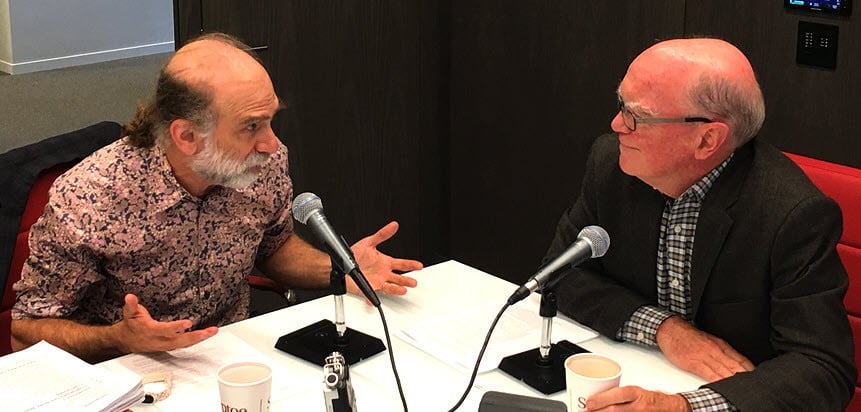
During a panel, The Verge hosted at the state of AI and song at Winter Music Conference, which included Bailey, Matt Aimonetti, CTO of Splice, and Taishi Fukuyama, CMO of Amadeus Code, an audience member requested just that. “What if I wanted to license my catalog to an employer so its AI could examine it?”
“Currently,” answered Aimonetti, “there’s no want for that.”
Even if an AI machine did closely mimic an artist’s sound, an artist would possibly have trouble proving the AI was designed to mimic them, says Aimonetti. With copyright, you need to show that the infringing writer became moderately exposed to the work they’re accused of ripping off. If a copyright declaration had been filed against a musical work made with the aid of an AI, how might everybody want to show that an algorithm was skilled at the track or artist it allegedly infringes on? It’s now not a smooth task to reverse engineer a neural network to see what songs it turned into fed as it’s “ultimately just a series of numerical weights and a configuration,” says Bailey. Additionally, at the same time as there are rankings of lawsuits in which artists were sued using other artists for failing to credit them on works, an employer ought to say its AI is a trade secret. Artists could argue in a courtroom to find out how the program works.

