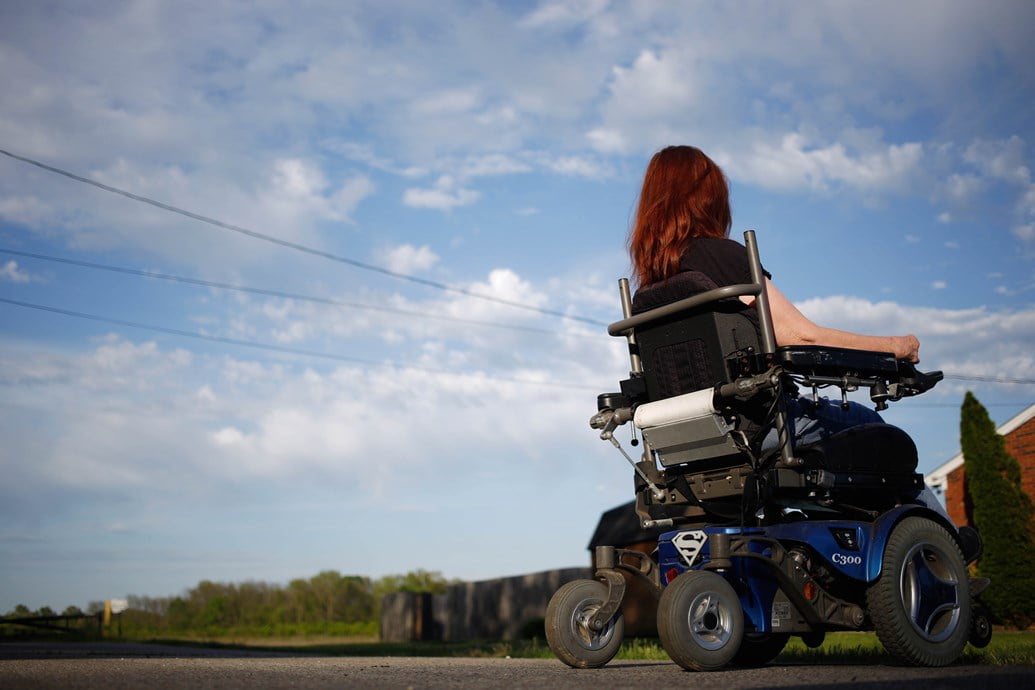













Susan approached her husband, heart thumping, as he sat in their dwelling room. Days in advance, on Valentine’s Day, she had been diagnosed with colon cancer. Now, her global situation is approximately resolved further. Susan mustered up all her courage and told her husband that they had to divorce.
Married for nearly three years, they have still been in love and desired to stay together. But to remain married could threaten to drop the fitness care Susan desperately wanted. Diagnosed with rheumatoid arthritis at age 4, she has lived with a continual ache for as long as she can remember. Susan struggles to get around without a cane or energy chair in the course of flare-ups. She didn’t have personal coverage at the time of her diagnosis, so Medicaid was vital for her to get the care she needed to manage her incapacity.
Her husband worked as a roof artisan and earned $12 an hour. His seasonal earnings fluctuations left Susan hovering close to the Medicaid eligibility cap, which came out to around $20,600 annually at the time in 2007. She already had briefly misplaced coverage in their marriage because her eligibility is based totally on household income. The cancer prognosis becomes the tipping factor. Susan’s husband had these days switched companies and earned a pay increase to $14 an hour. Warmer spring months would bring additional production of paintings. But greater earnings weren’t necessarily the right information. Instead, it surfaced the nagging anxiety that Susan could lose Medicaid eligibility again, as her medical bills were about to skyrocket.
Divorce, they decided, might dispose of the month-to-month opportunity of losing insurance — and the fear that came with it.
Susan’s part of a growing number of Americans, sixty million people with disabilities, who will go through acute trade-offs between health care and marriage. Couples with disabilities historically have faced extra limitations to marriage. But OZY research reveals an unexpectedly widening disparity in marriage fees among people with and without disabilities over the years, because Susan’s divorce was sparked by using outdated eligibility thresholds and a convoluted web of health care applications that many find difficult to navigate.
Between 2009 and 2018, almost 1.1 million Americans with disabilities got divorced, nearly twice the number — 593,000 — that got married, U.S. Census Bureau statistics show. In the same duration, 1.5 million people without disabilities divorced le, less than a 3rd of the 5.2 million who were married. This “divorce gap” raises the question of what number more like Susan are ending satisfied marriages to cozy health care.
Experts say the gadget has been stacked towards marriage for humans with disabilities for decades, stretching returned to the eugenics movement. Between the 1920s and ‘70s, more than 60,000 people with disabilities were forcibly sterilized to steadily rid the human gene pool of tendencies that were then considered undesirable. The 1927 Supreme Court decision upholding sterilization, Buck v. Bell, was never officially overturned. In states together with Washington and Michigan, courts retain to accept requests from guardians of individuals with disabilities for his or her sterilization.

